
Doom and Dread in Perimenopause: What It Is and Why It Happens
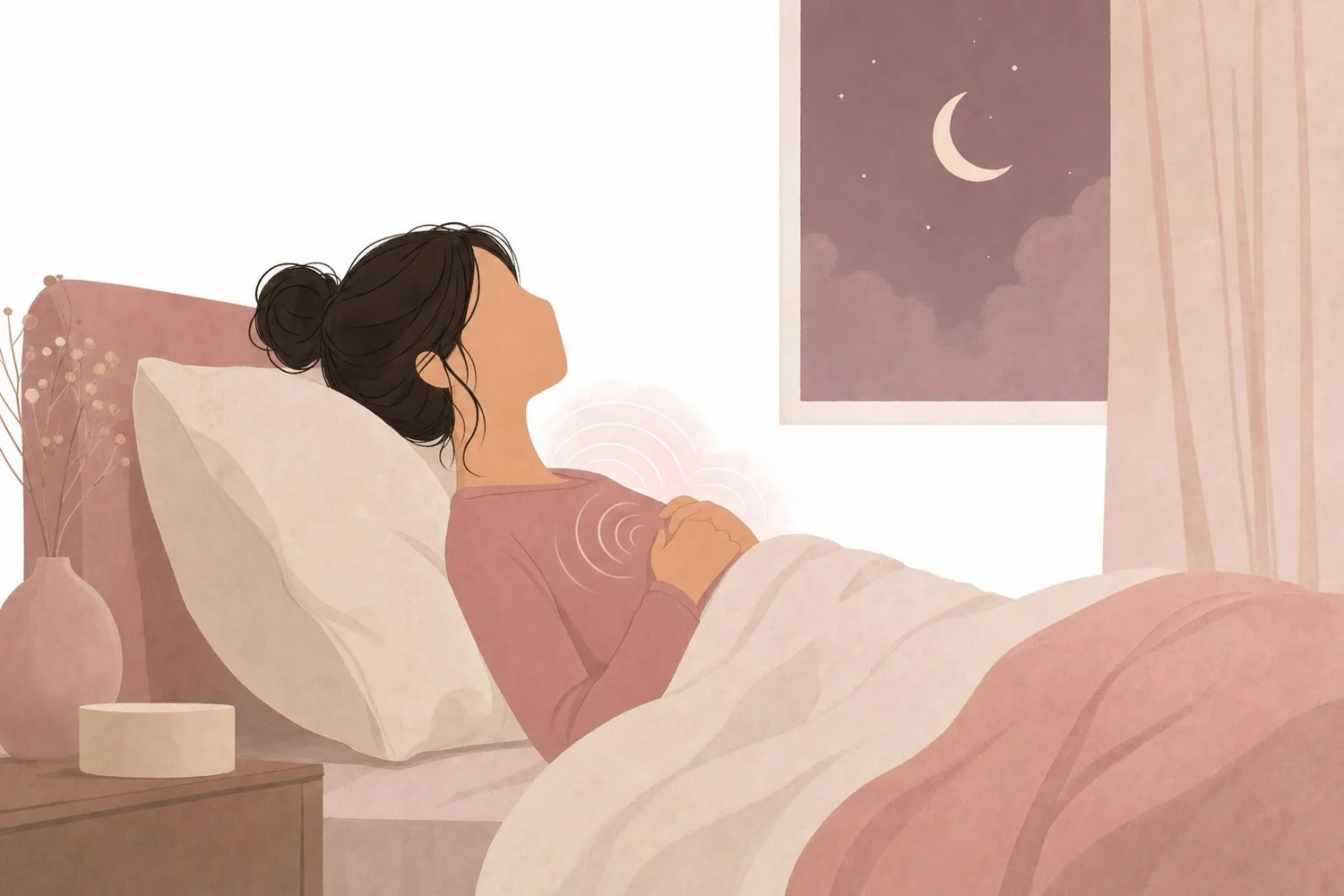
Woman waking in bed at night with anxiety during perimenopause, crescent moon through window, illustration
It's 2:47 in the morning. You're wide awake, heart pounding, and there's no reason for it: no nightmare, no noise in the house, nothing wrong you can point to. And yet every cell in your body insists something terrible is happening, or about to. Maybe it's a vague sense that someone you love is in danger. Maybe it's the conviction that you, yourself, are dying, even as you lie safely in your own bed.
If this sounds familiar, know two things right away: you are not losing your mind, and you are not alone. In my clinical work, I hear women in their forties and early fifties describe this again and again — a sudden, visceral wave of dread that comes from nowhere and defies explanation. It has a name. It's a real, recognized experience in perimenopause, with a clear biological reason behind it.
What Doom and Dread Actually Is
"Doom and dread" is the phrase many women use for a distinct kind of fear that shows up during the perimenopausal transition. It's different from the anxiety most of us know. Ordinary worry tends to live in the mind, looping through scenarios and rehearsing worst cases. Doom and dread doesn't start there. It starts in the body — arriving suddenly, often at night, with a racing heart, a tight chest, and a wave of existential fear with no story attached to it. Some women describe it as "feeling like I'm dying." Others describe a certainty that something terrible is about to happen to someone they love, even when everyone is safe.
It also travels alongside hot flashes, fragmented sleep, and heart palpitations, and often comes in waves that cluster at certain points in the menstrual cycle before easing and returning. This cyclical, physical, middle-of-the-night quality is one of the clearest signs that this isn't garden-variety worry — and research documents that between 45 and 68% of perimenopausal women experience some form of mood symptoms during the transition, compared to 28–31% of premenopausal women, while anxiety disorders affect roughly 1 in 4 women during this phase (OHSU Mood and Menopause, Adams 2022; Garg & Munshi, PMC 2025).
The Biology Behind It
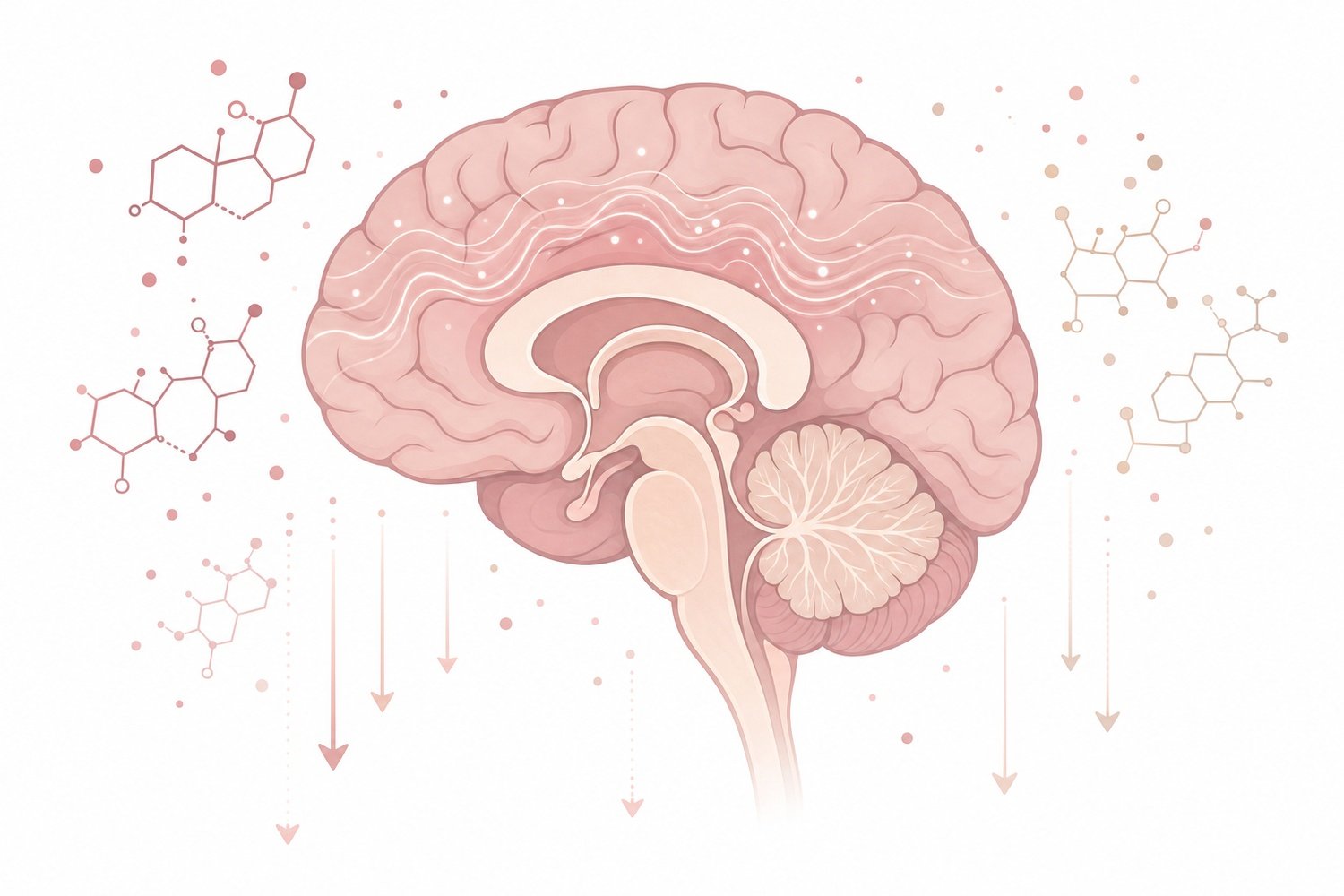
Illustration of brain chemistry changes in perimenopause showing progesterone and neurosteroid depletion with downward arrows
Here's the part almost no one explains clearly — and it's the part that changes everything.
Progesterone doesn't just regulate your cycle. It breaks down into a compound called allopregnanolone, a neurosteroid that acts directly on GABA-A receptors in the brain — your nervous system's braking system, the part that tells your body it's safe to stand down. It's sometimes called the brain's own natural calming agent. In perimenopause, progesterone often starts declining earlier and more sharply than estrogen, and as it drops, so does allopregnanolone. The brain's brake loses its grip, and the nervous system struggles to stop fear once it starts.
What makes this even more complicated: during hormone fluctuation, the GABA-A receptor itself can fail to adapt its structure to the shifting allopregnanolone levels. When this happens, allopregnanolone can have a paradoxical effect — instead of calming the nervous system, it can briefly become activating, and what was supposed to be a natural anxiolytic starts working in reverse. Research on ovarian hormone fluctuation and neurosteroids identifies this as a candidate mechanism for why some women are particularly vulnerable to anxiety and mood instability during perimenopause (Gordon et al., PMC 2015).
Meanwhile, estrogen isn't simply falling — it spikes and crashes unpredictably, and since estrogen receptors densely populate the prefrontal cortex and hippocampus (regions key to emotional processing and fear regulation), these erratic swings destabilize the circuits that would normally keep fear in check. Estrogen also supports serotonin, norepinephrine, and dopamine pathways; when its levels become erratic, all of those systems feel the turbulence. Add a stress-response system (the HPA axis) that becomes hypersensitive when estrogen signaling is disrupted, and the body's threat-detection system starts firing even when no real threat is present (Gordon et al., PMC 2015; Garg & Munshi, PMC 2025).
This is also why episodes so often hit at night: progesterone and allopregnanolone are typically higher after dark, so when that cushion is gone, its absence is felt acutely — as a jolt of fear that pulls you straight out of sleep.
Sit with this: it's neurobiological, not psychological. It isn't anxiety about menopause or your life circumstances. It's anxiety caused by a disruption in the brain's own calming chemistry. Your body isn't overreacting to nothing. It has temporarily lost some of the tools it normally uses to feel safe.
Why It's So Often Missed
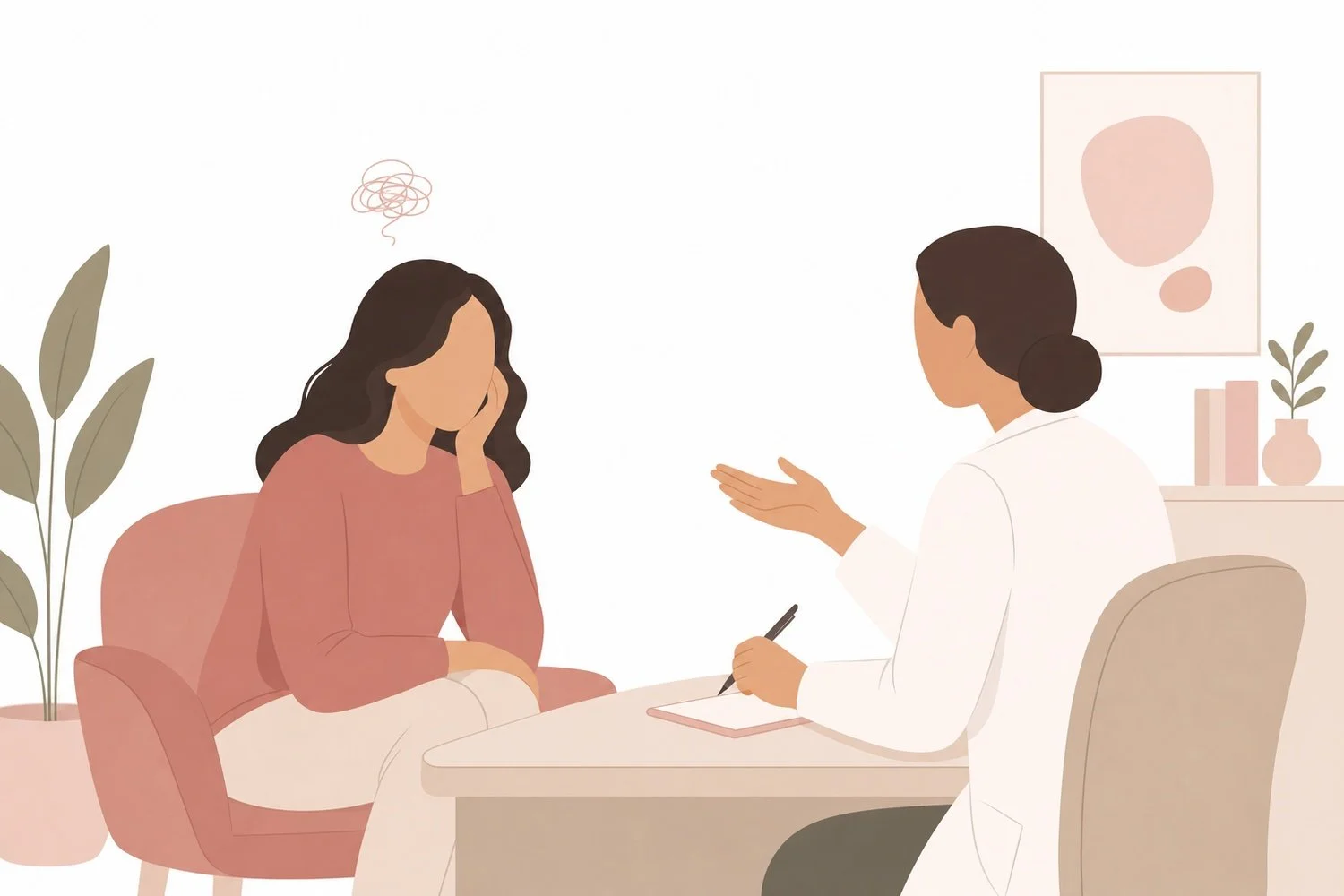
Woman with perimenopausal anxiety at a doctor's appointment feeling unheard, illustration showing gap in hormonal awareness
This is where things get frustrating. Doom and dread looks and feels like panic disorder or generalized anxiety disorder from the outside, so it often gets diagnosed and treated as exactly that — with no one asking a basic question: what's happening hormonally right now, and could that be driving this?
That gap matters, because it changes the treatment plan. SSRIs can genuinely help many women, but when the underlying mechanism is a collapse in GABAergic tone driven by falling progesterone and erratic estrogen, an SSRI alone often treats only part of the picture. Without recognizing the hormonal context, a woman can cycle through medication adjustments feeling like nothing works, when the real issue is a mismatch between treatment and mechanism. Research from The Menopause Society also notes that the route of hormone therapy matters for mental health — transdermal estradiol has been associated with lower incidence of anxiety and depression compared to oral hormone therapy, which is a clinically meaningful distinction when treatment conversations happen (The Menopause Society, 2025).
What Can Help
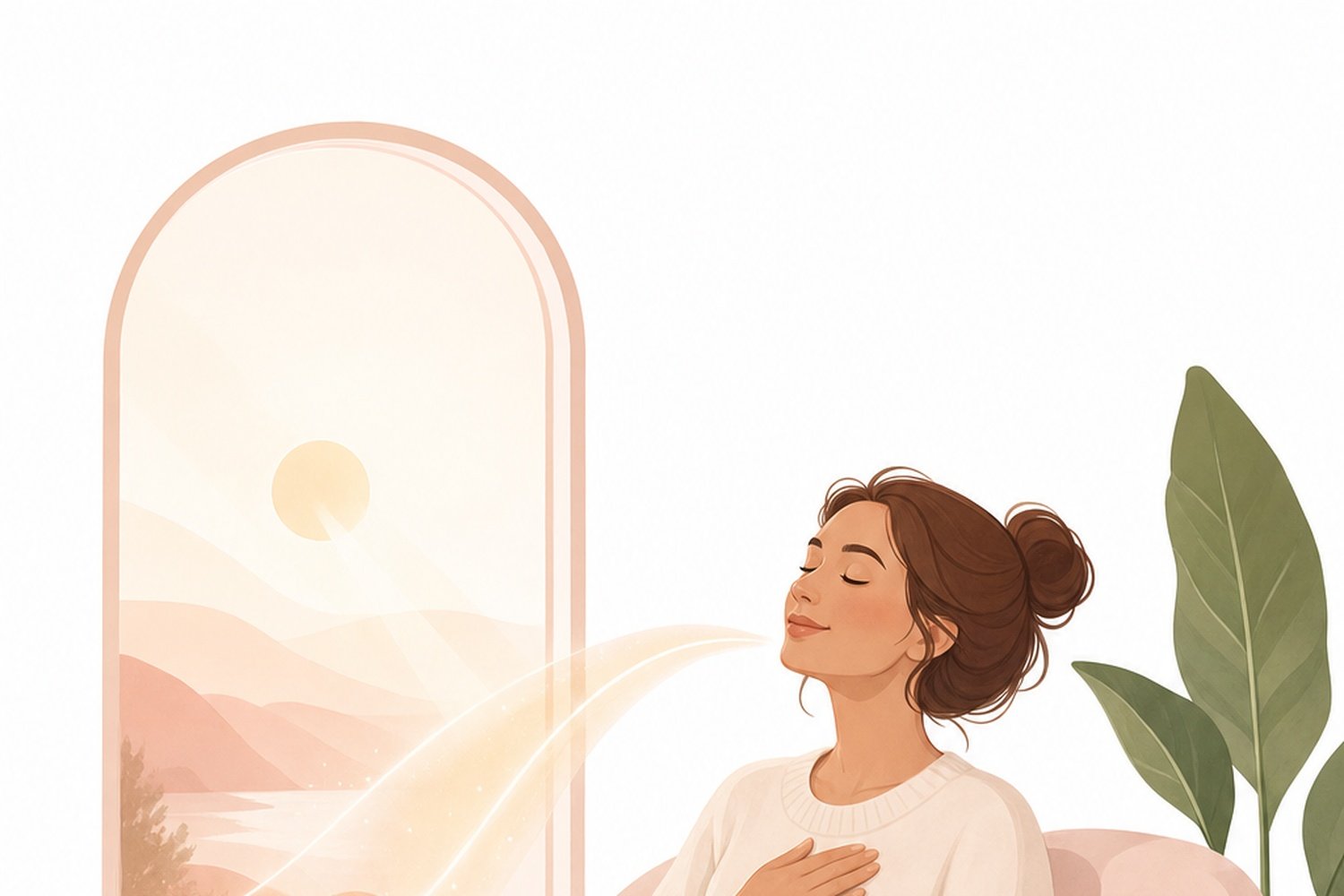
Woman practicing nervous system regulation and grounding techniques for perimenopausal anxiety, sitting peacefully in morning light
The first thing that helps, always, is having language for what's happening. Knowing that doom and dread is a documented, biologically explainable part of perimenopause — not a sign that you're unraveling — changes your relationship to the fear itself. It won't make the sensation disappear instantly, but it removes the second layer of terror that comes from believing something is wrong with you.
A therapist who understands this hormonal context can help you build a different relationship with the sensations as they arise, so the doom feeling doesn't spiral into something bigger. Research supports several specific approaches: Cognitive Behavioral Therapy (CBT) has a strong evidence base for menopausal anxiety and depression, with group CBT associated with up to 50% reductions in anxiety and 55% reductions in depressive symptoms in studies of perimenopausal women, and it is now recommended as a first-line option by the North American Menopause Society and NICE guidelines (Rukure & Husted, BMC Women's Health 2025). Mindfulness-Based Stress Reduction (MBSR) also shows significant reductions in anxiety, stress, and perimenopausal mood symptoms, and appears especially beneficial for women with a history of depression and higher hormonal sensitivity (Huang et al., 2023).
Because your body is in a genuine physiological threat state during these episodes, somatic nervous system tools — slow breathing, grounding, body-based awareness — can help signal safety back to a system that's misfiring. Sleep deserves close attention too, since disrupted sleep and doom-and-dread episodes often feed each other, and improving sleep (including CBT for insomnia, or CBT-I) is frequently the first domino that reduces how often these waves occur.
None of this replaces good medical care. A gynecologist or menopause specialist with a hormone-informed approach is often essential, working alongside a therapist rather than instead of one. And this phase is not permanent — as hormones settle, this particular fear tends to ease.
You're Not Broken, and This Can Get Better
If you've been living with these episodes and wondering why nothing quite fits — a panic disorder diagnosis, an anxiety workbook, reassurance that you're "just stressed" — I hope this gives you something more accurate to hold onto. What you're experiencing has a name and a trajectory that improves.
If this resonates and you're looking for a therapist who understands the hormonal context of what you're going through, not just the surface-level anxiety, I'd be glad to talk with you. I work virtually with women across California, and I'd welcome the chance to support you through this. You can learn more or reach out at brighterdaysteletherapy.com.
Sources: